
Featured project · 2026 – present
Paddock Pal
Livestock management for our own sheep flock – plus a mobile app for the paddock
Featured project · 2026 – present
Paddock Pal
Livestock management for our own sheep flock – plus a mobile app for the paddock
The problem
We used to manage our flock in a spreadsheet and take a printout down to the paddock at treatment time. Picture it: hunting for the right sheep number on a small sheet of paper the wind keeps trying to steal, forgetting which pocket the pen is in, and digging out reading glasses to make it all work. By the end of a session with just 19 sheep, the page was covered in grass and sheep poo – and I still had to go back up to the house and update the spreadsheet by hand.
On top of that was the constant juggling: which lamb is due for its booster vaccination, and which ewe is ready to go in with the ram. I wanted one place that turns scattered records into clear, timely decisions.
My role
Product owner, lead developer and end user – requirements, architecture, business rules and delivery, from concept to a working system.
Stack
- .NET 10 Minimal APIs
- EF Core
- SQL Server
- React
- TypeScript
- .NET Aspire
- Microsoft Agent Framework
- Claude
- GitHub Actions
- Tailscale
Decisions worth showing
- AI researches the rules, code applies them. An AI research agent helps set up the farm rules, such as product withholding periods and vaccination schedules, by researching them and looking at our current flock data. Once a rule is approved, the day-to-day numbers – withholding periods, due dates and inbreeding coefficients – are calculated by plain, unit-tested C#, so they are exact and repeatable.
- AI proposes, a person decides. Agents research and suggest breeding and treatment plans; every proposal waits for approval, and agents show in the audit trail as separate actors.
- Built for trust. Soft deletes, temporal history and a full audit trail, backed by domain rule tests, API integration tests against a real SQL Server and agent evaluations in CI.
Next steps
- Mobile paddock app. Offline-first for patchy rural coverage, with changes queued on the device and synced when signal returns. The goal is voice-driven recording: identify an animal, record a treatment and schedule follow-ups without putting down the drench gun.
- Tailscale across our home computers. Secure, private access to Paddock Pal from every computer in the house, not just one.
- Onboarding process. A guided setup so a new user can add their farm, flock and treatment products without needing me beside them.
- User manuals. Short, practical guides written for farmers, not developers.
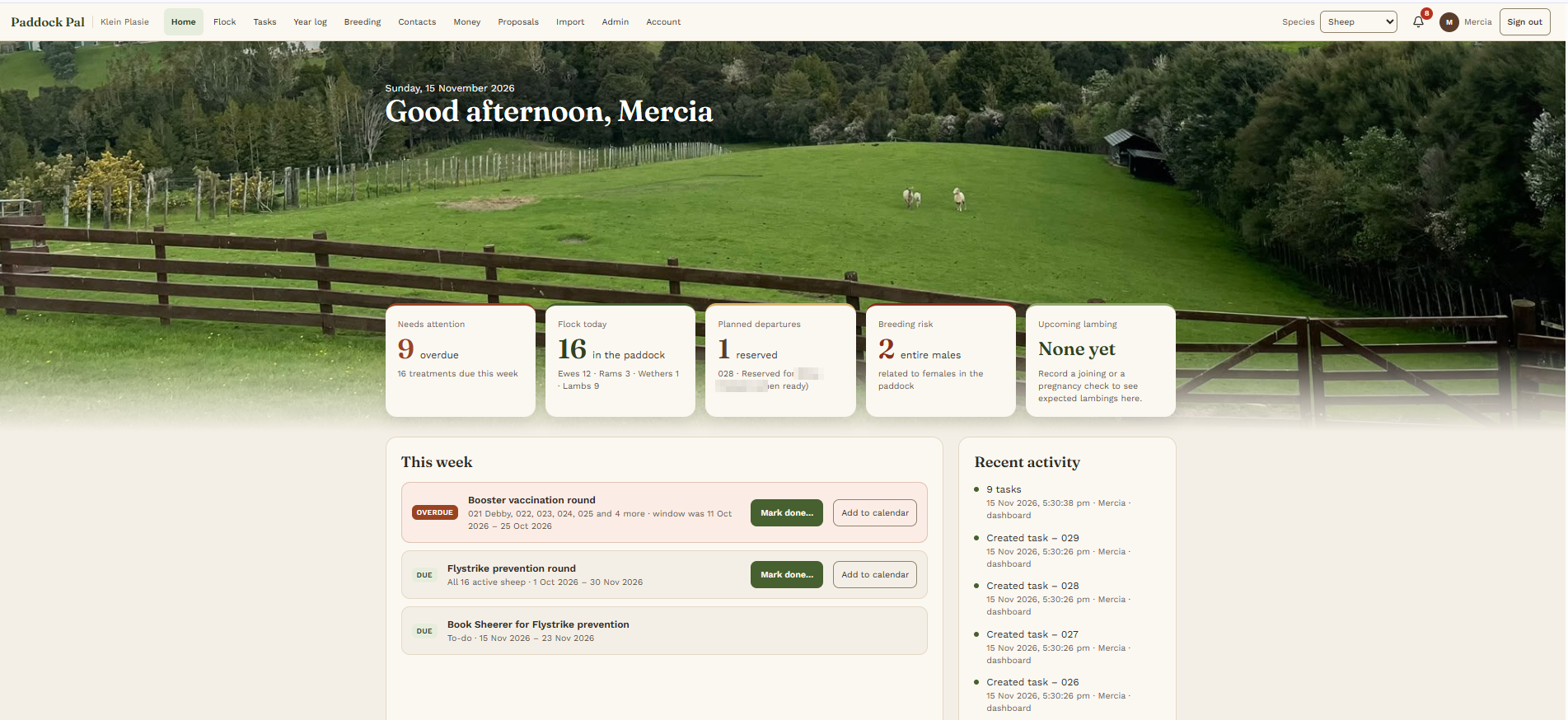
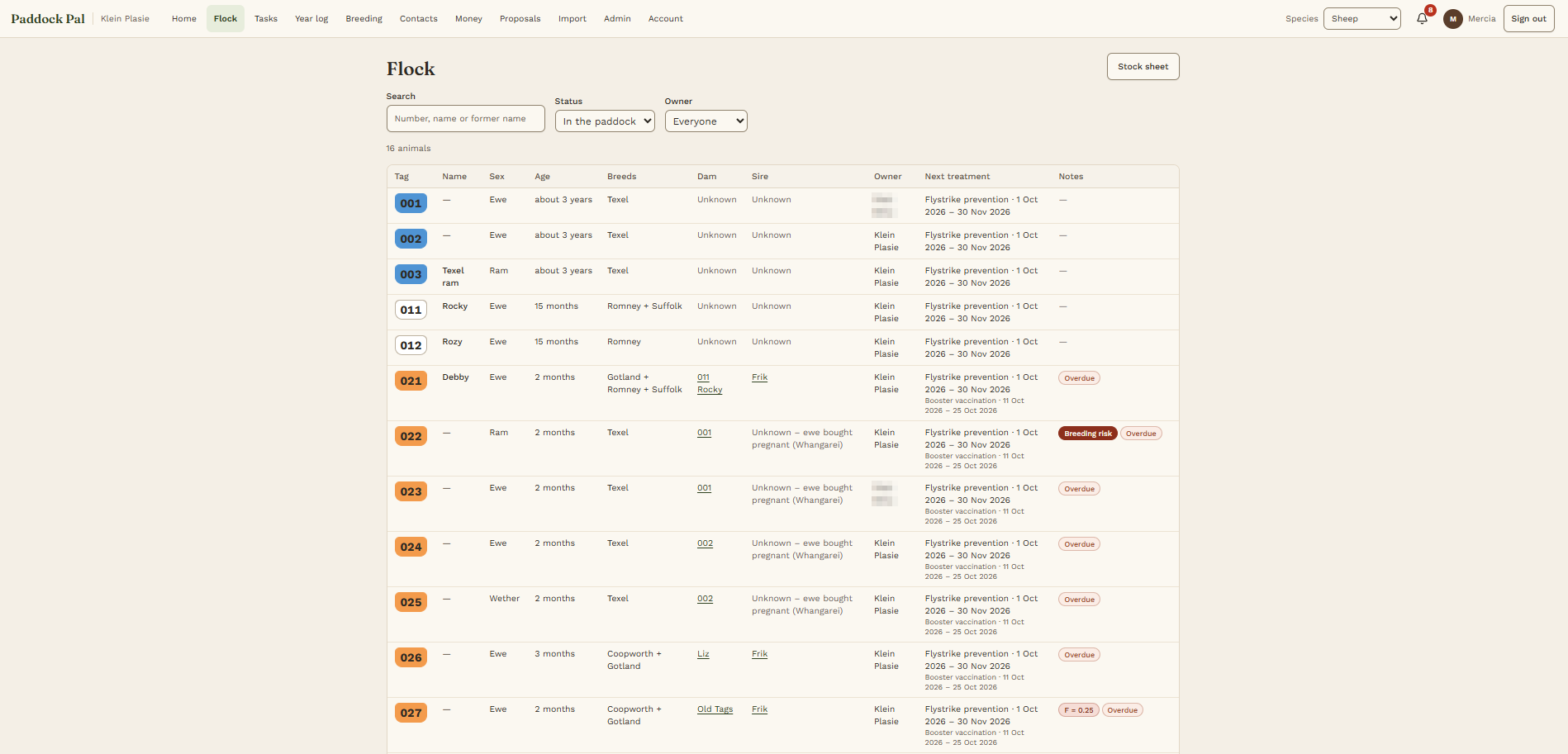
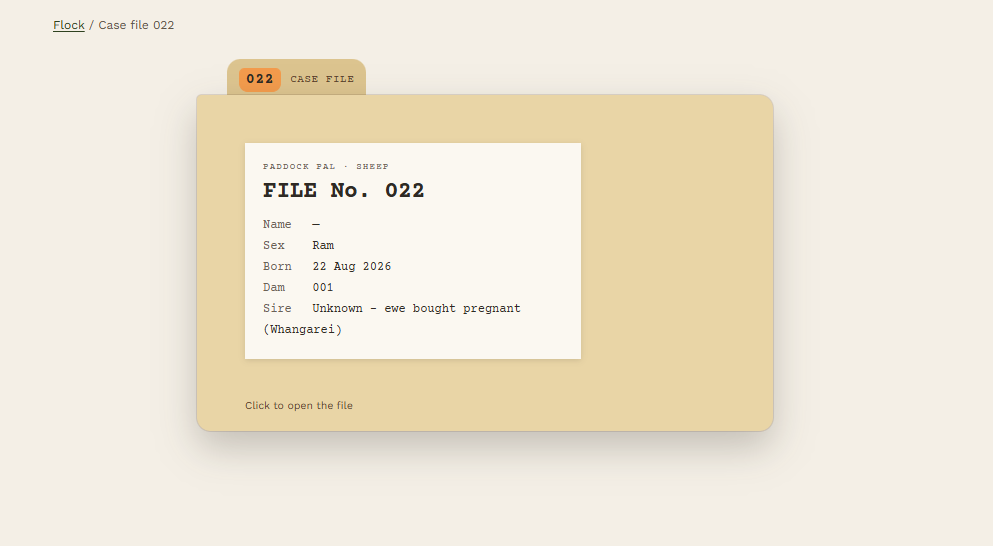
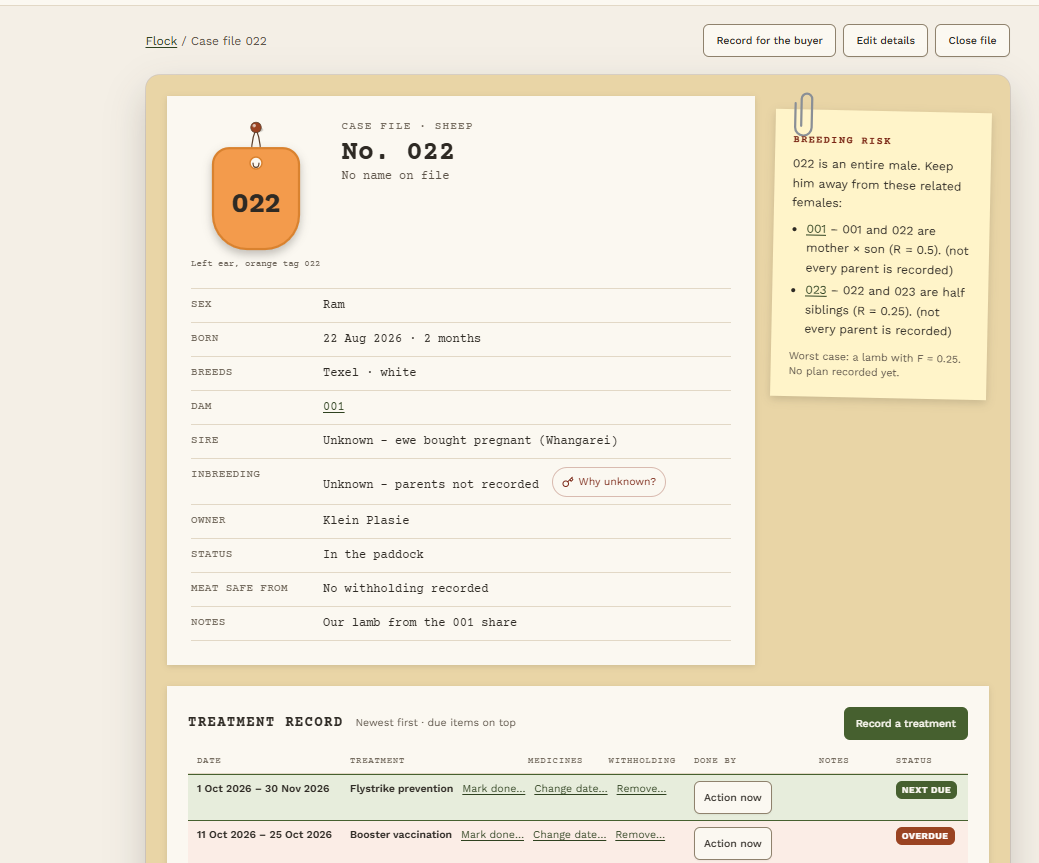
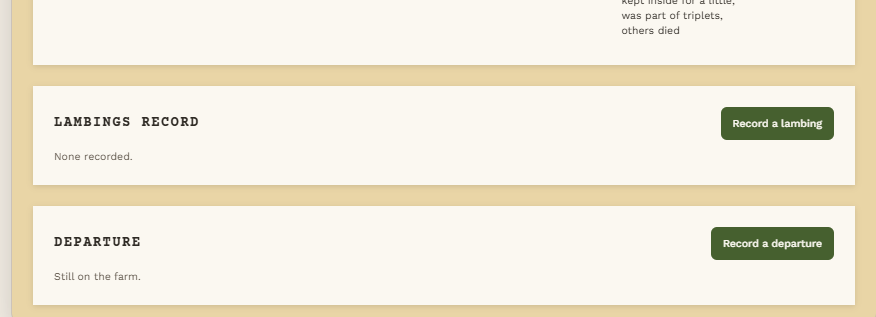
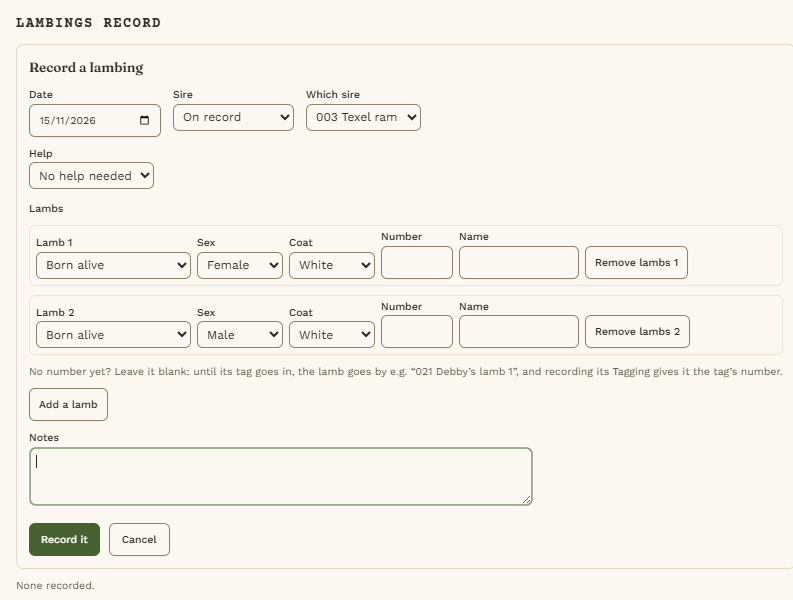
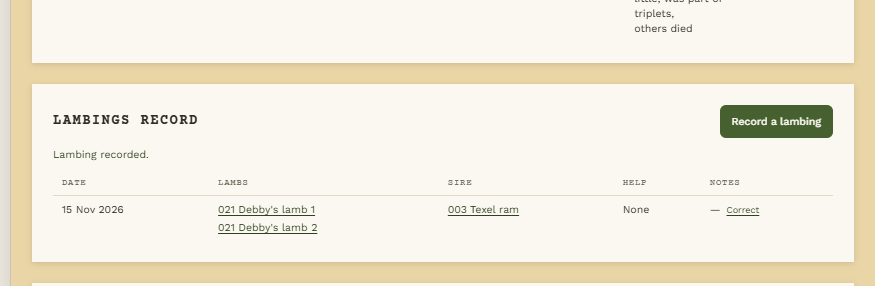
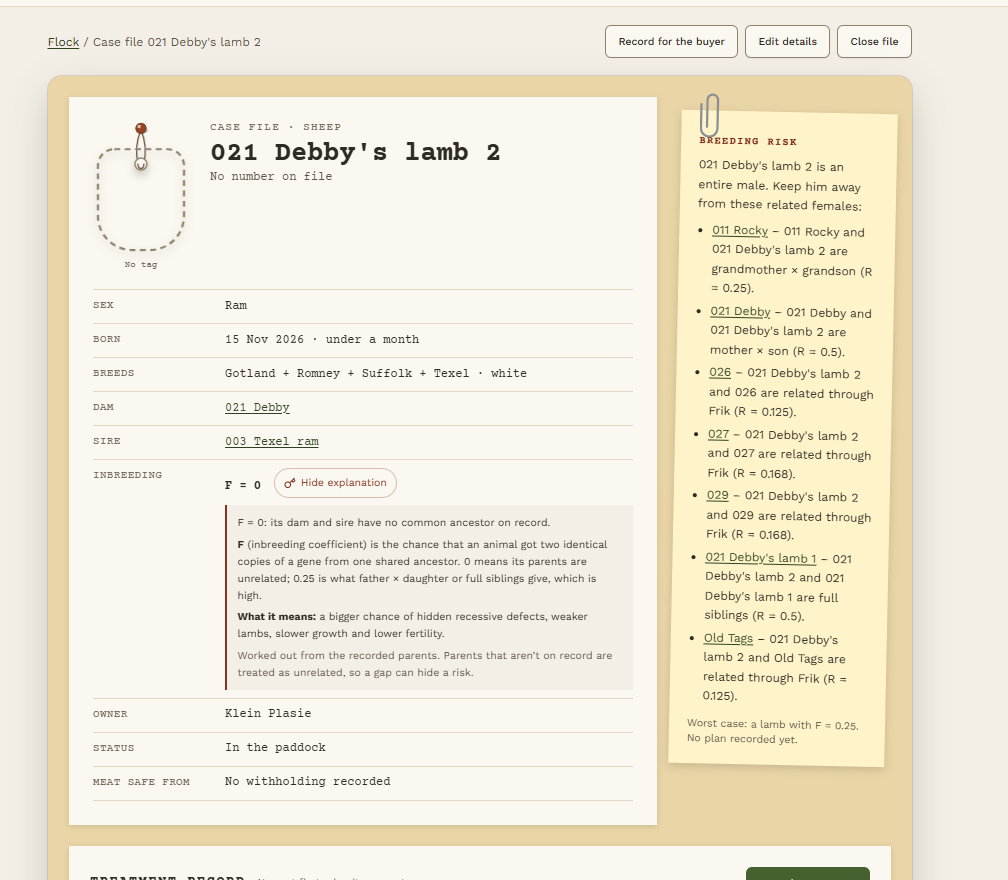
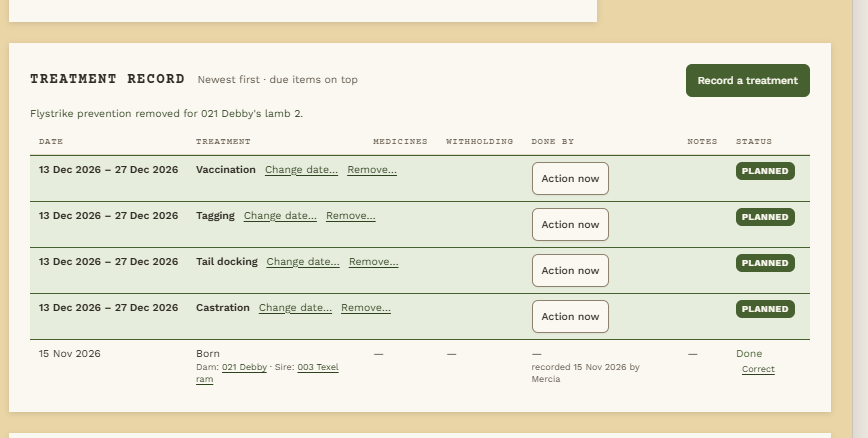
Recording a lambing
From the ewe's case file to a new case file for every lamb, with its inbreeding risk and first treatments set up automatically.
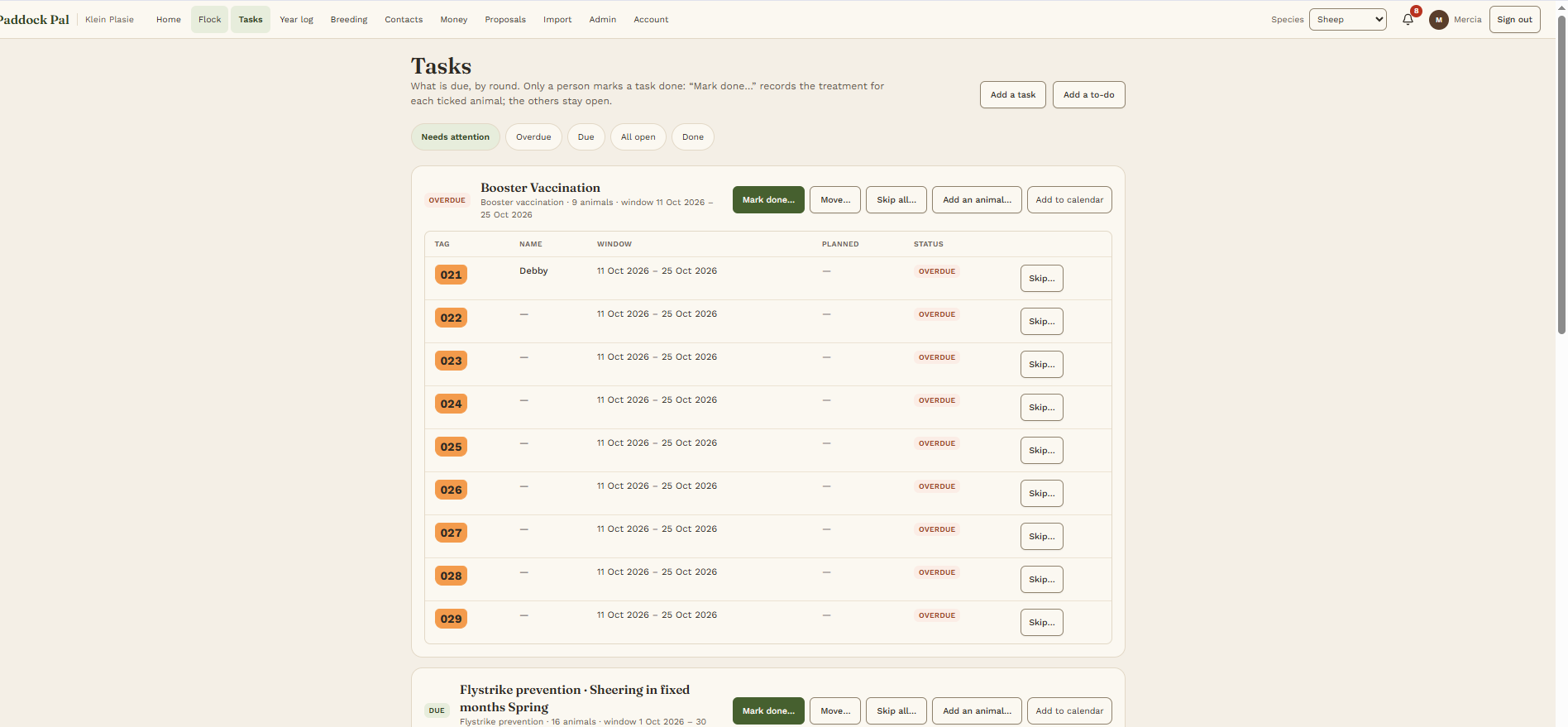
Treatment rounds
Going down to the paddock with a clear list of who needs what.
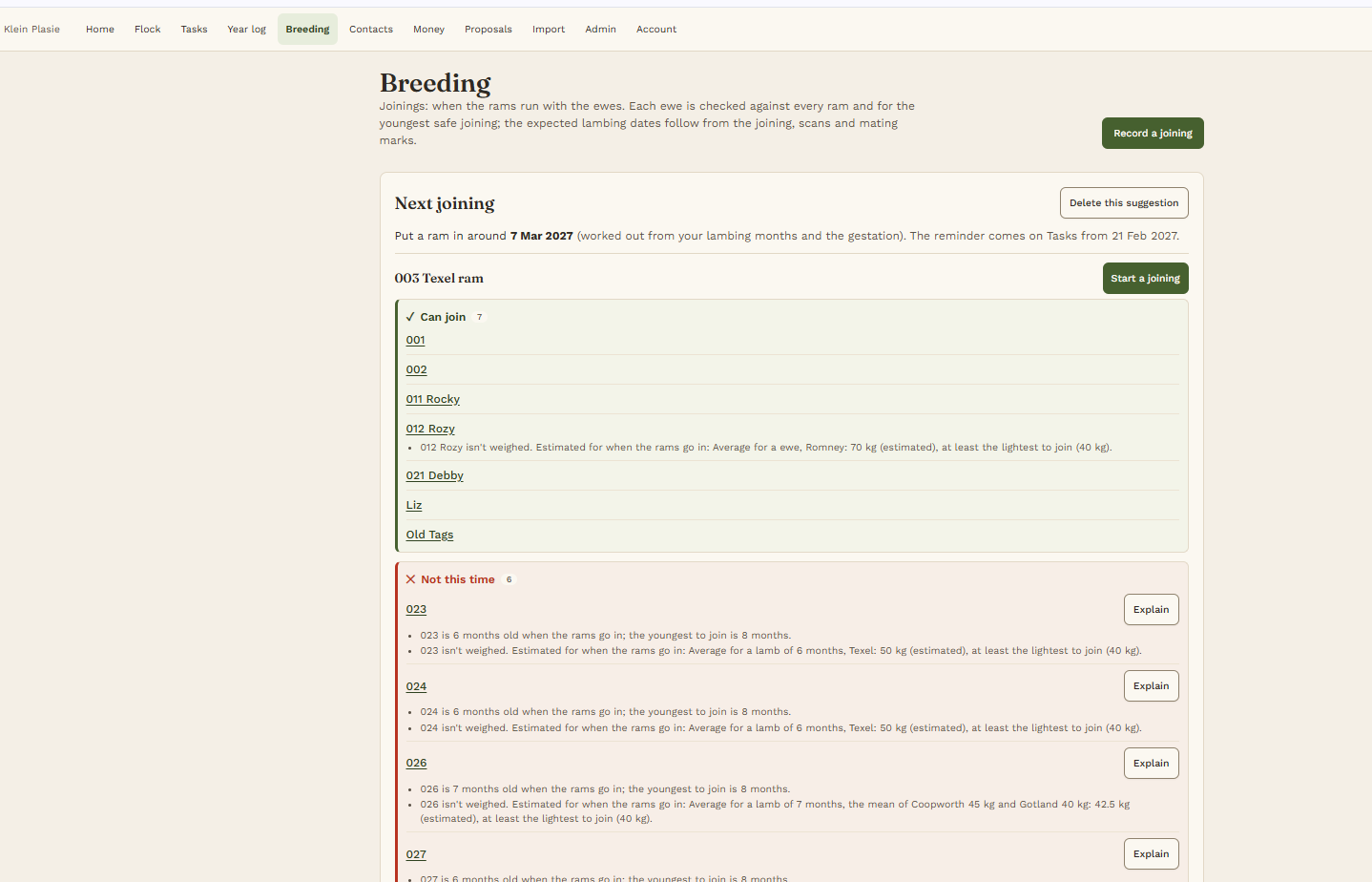
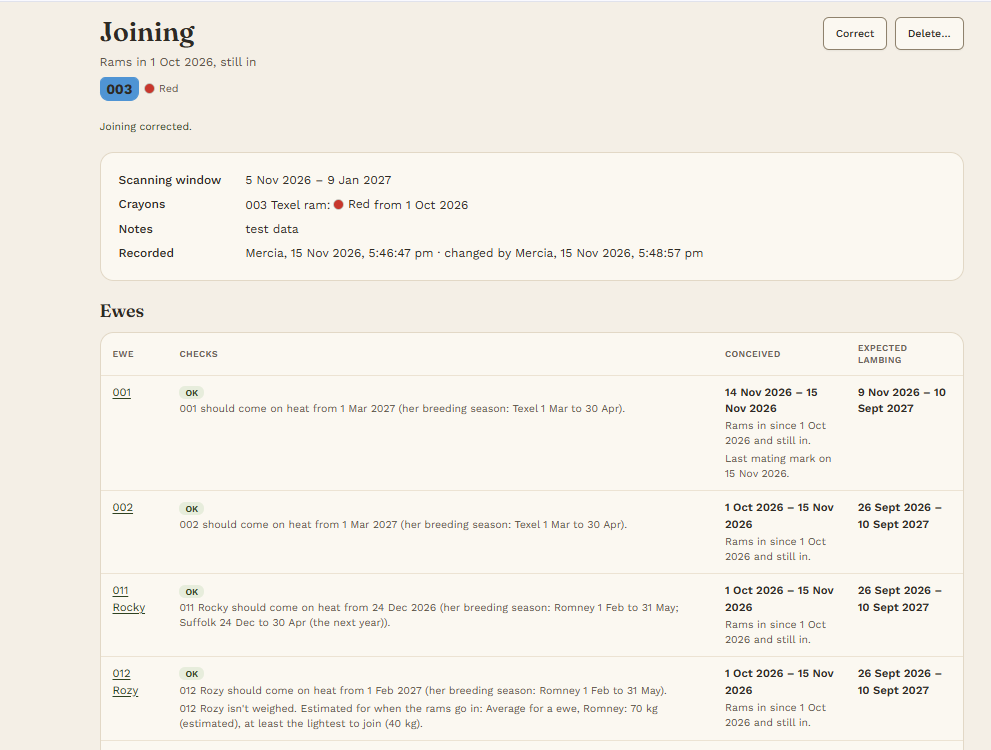
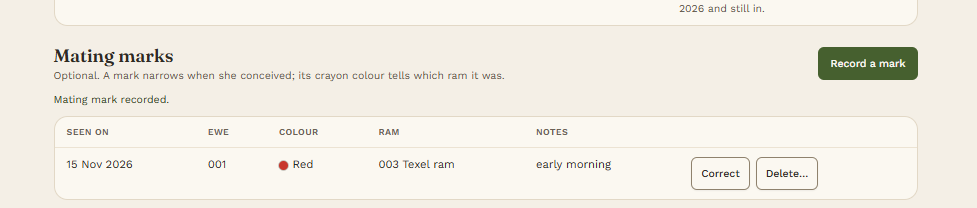
Breeding and joinings
Suggested joinings, inbreeding and age checks, mating marks and expected lambing dates.
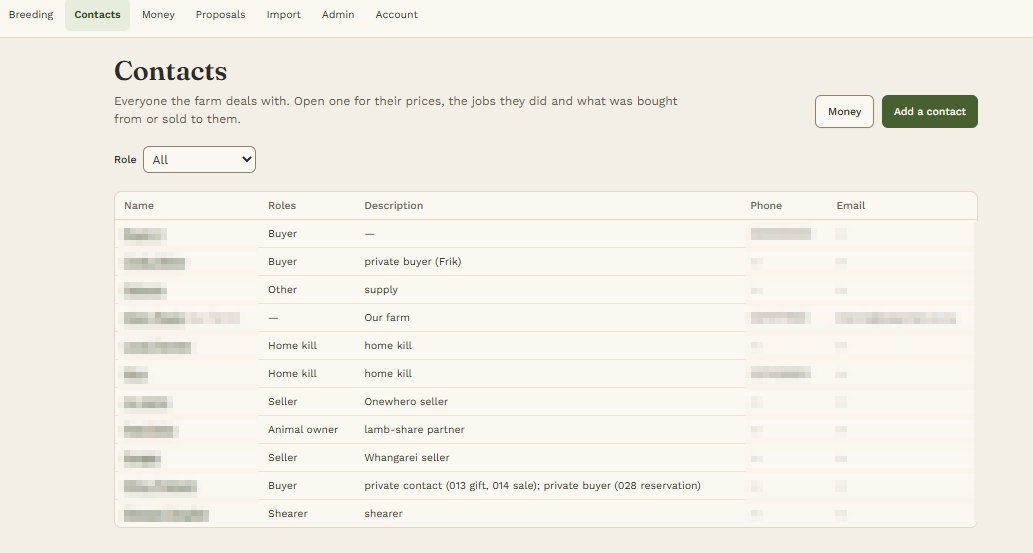
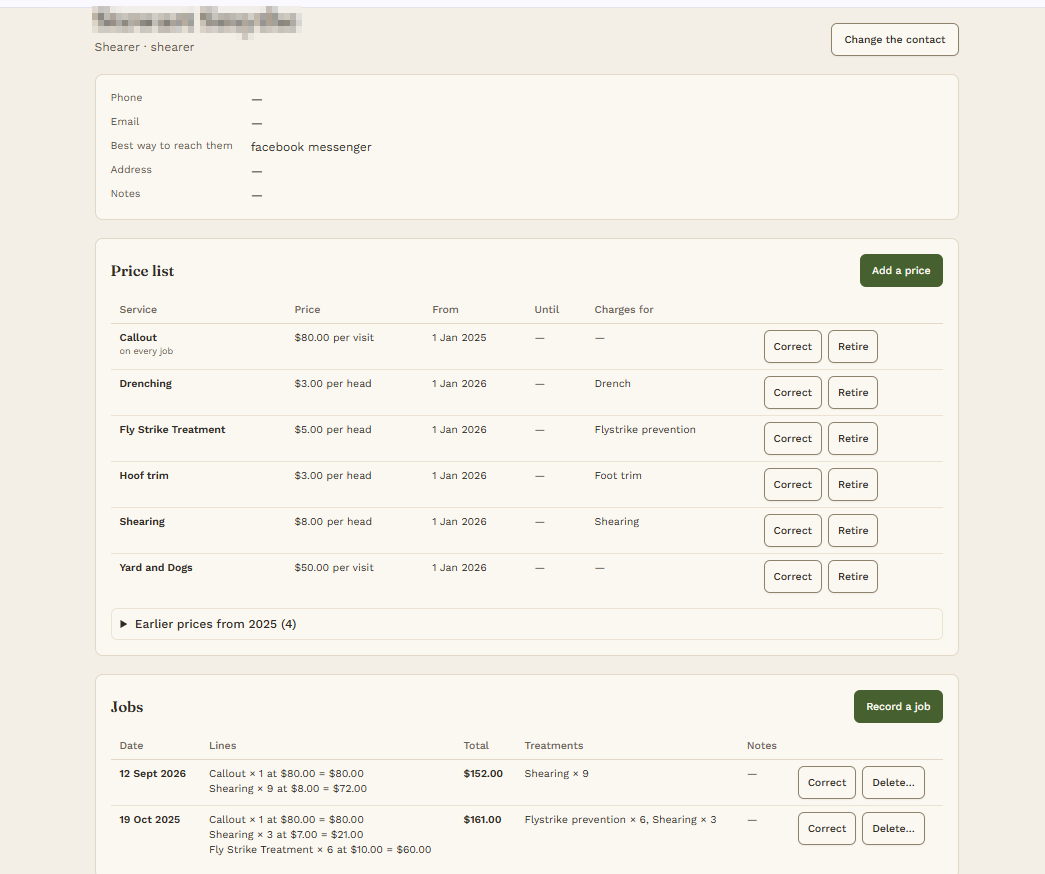
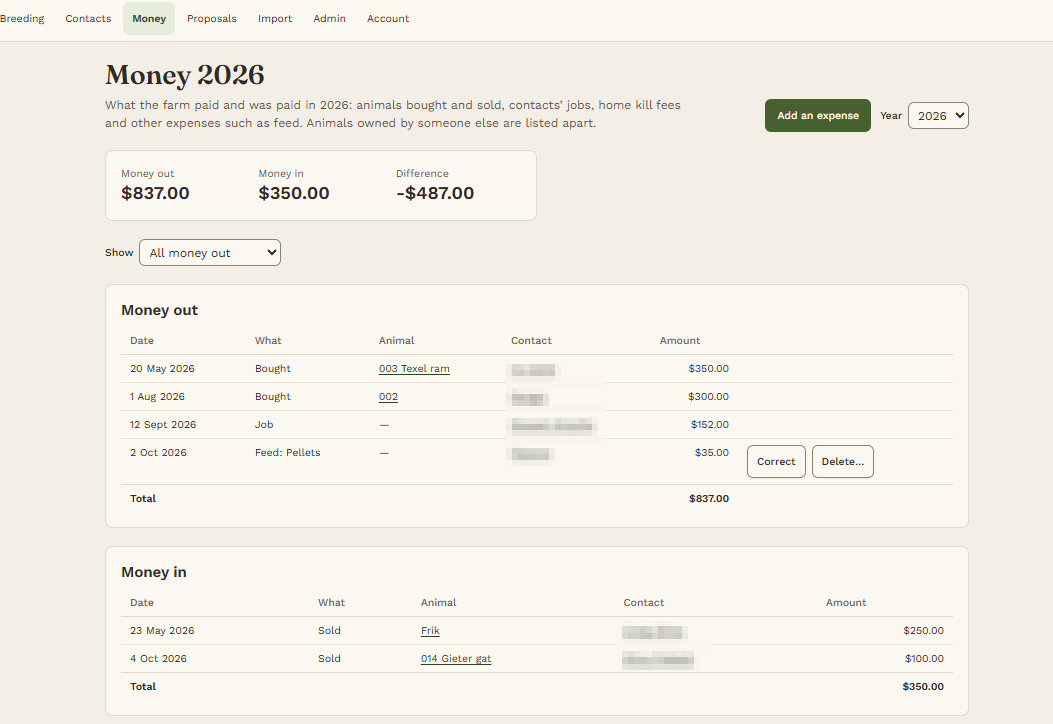
Contacts and money
Everyone the farm deals with, what they charge, and where the money goes.
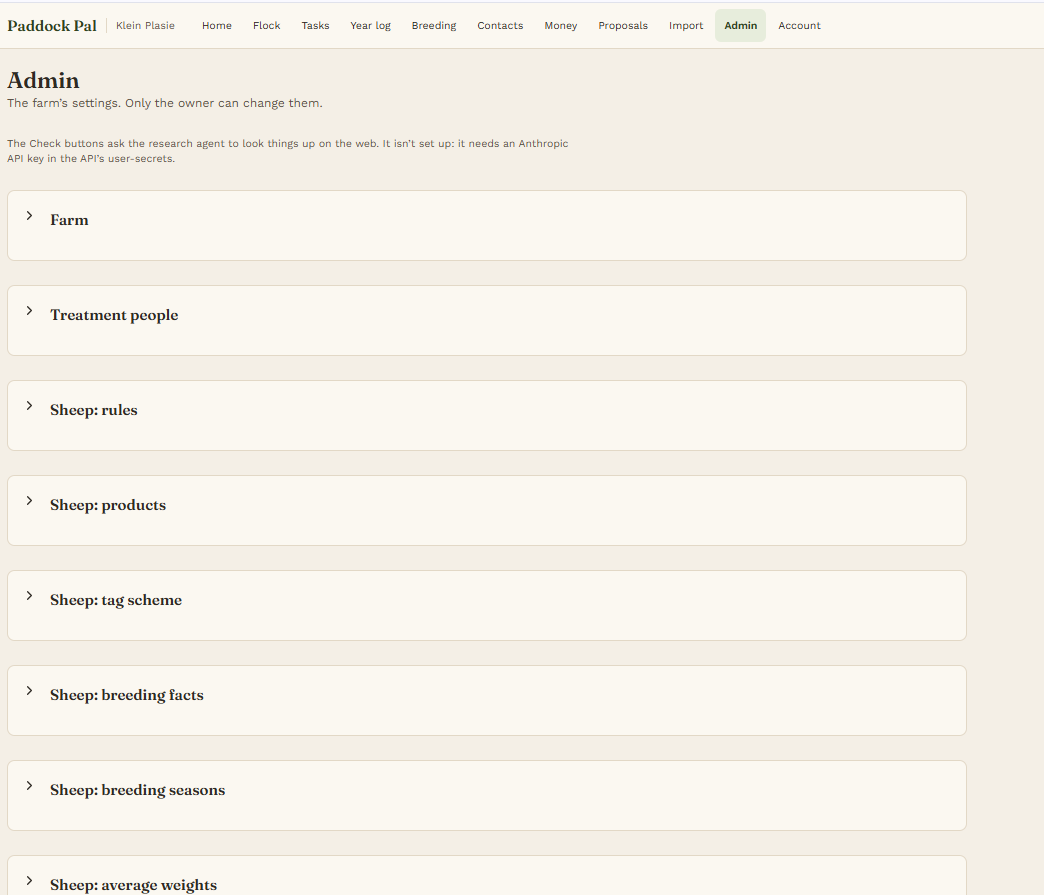
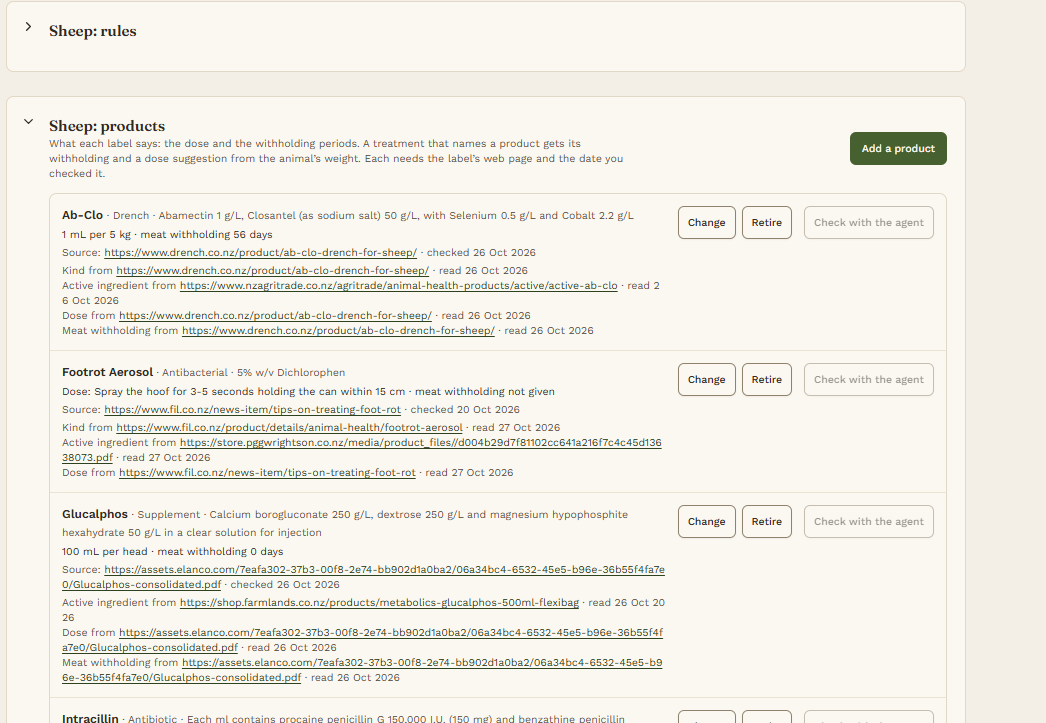
Admin: rules and products
Every farm rule and medicine, set up with the help of the AI research agent – and kept up to date with "Check with the agent" or by hand.
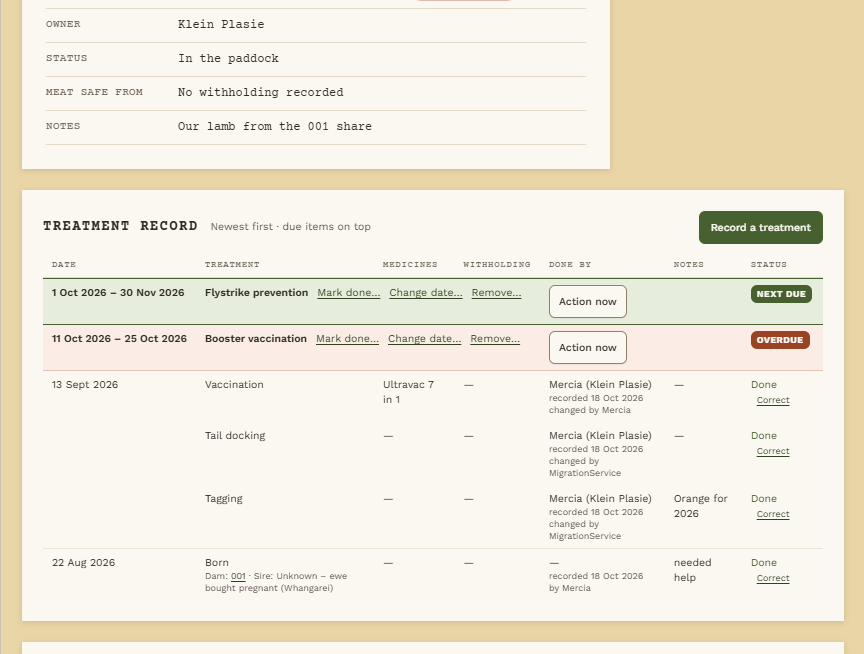
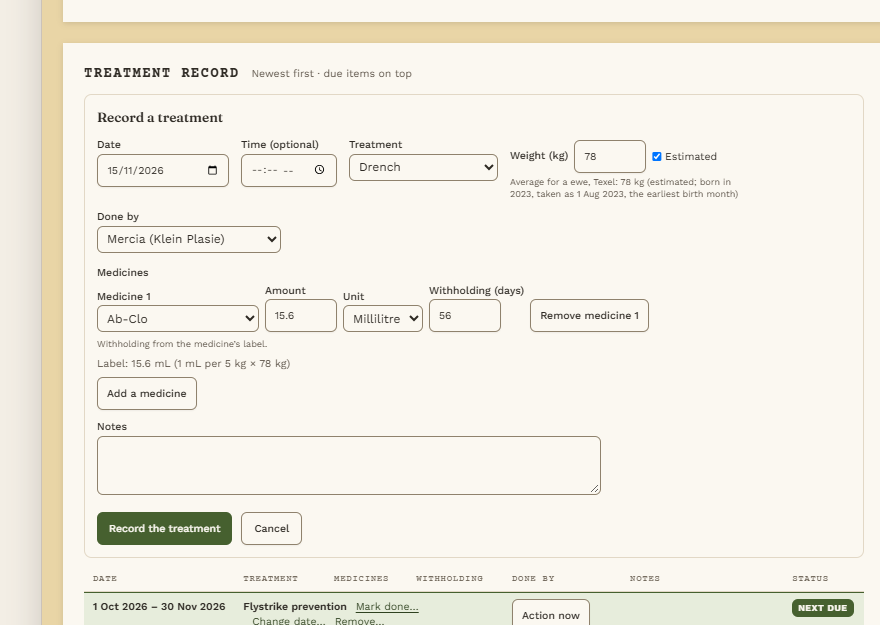
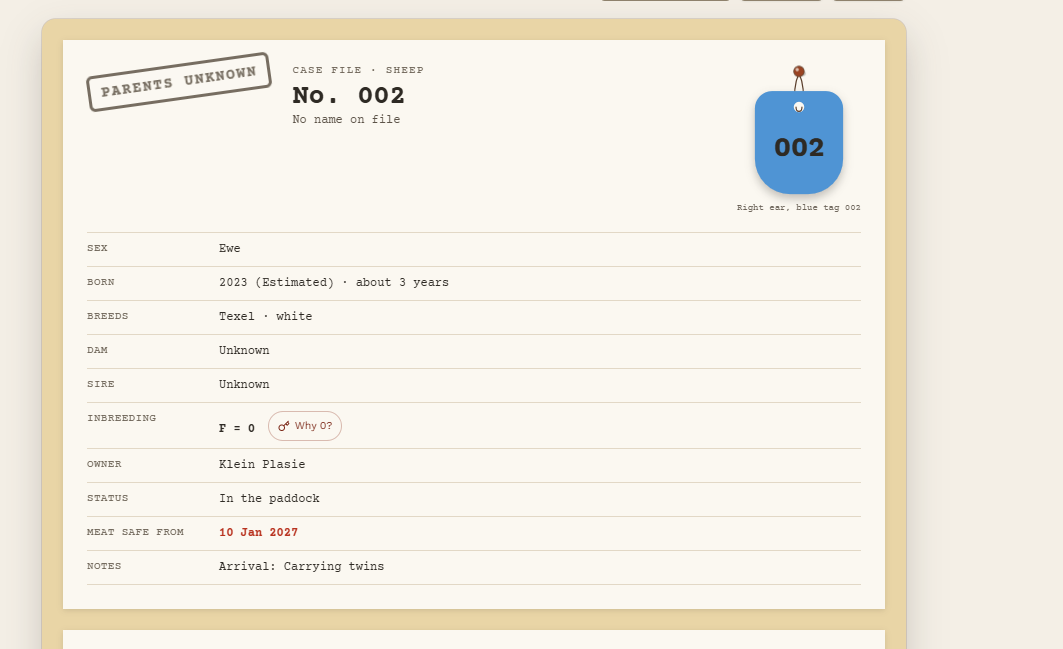
A rule in action: withholding periods
One treatment, and the rules take care of the dose, the withholding period and the warning.
Live in production · 2026 – present
 Tutoring booking platform
Booking and client management for a live tutoring business – built and run as sole developer
Live in production · 2026 – present
Tutoring booking platform
Booking and client management for a live tutoring business – built and run as sole developer
The problem
Bookings, approvals and follow-ups were manual. The business needed clients to request sessions easily, while the teacher stayed in control of what actually went into the schedule.
What I built
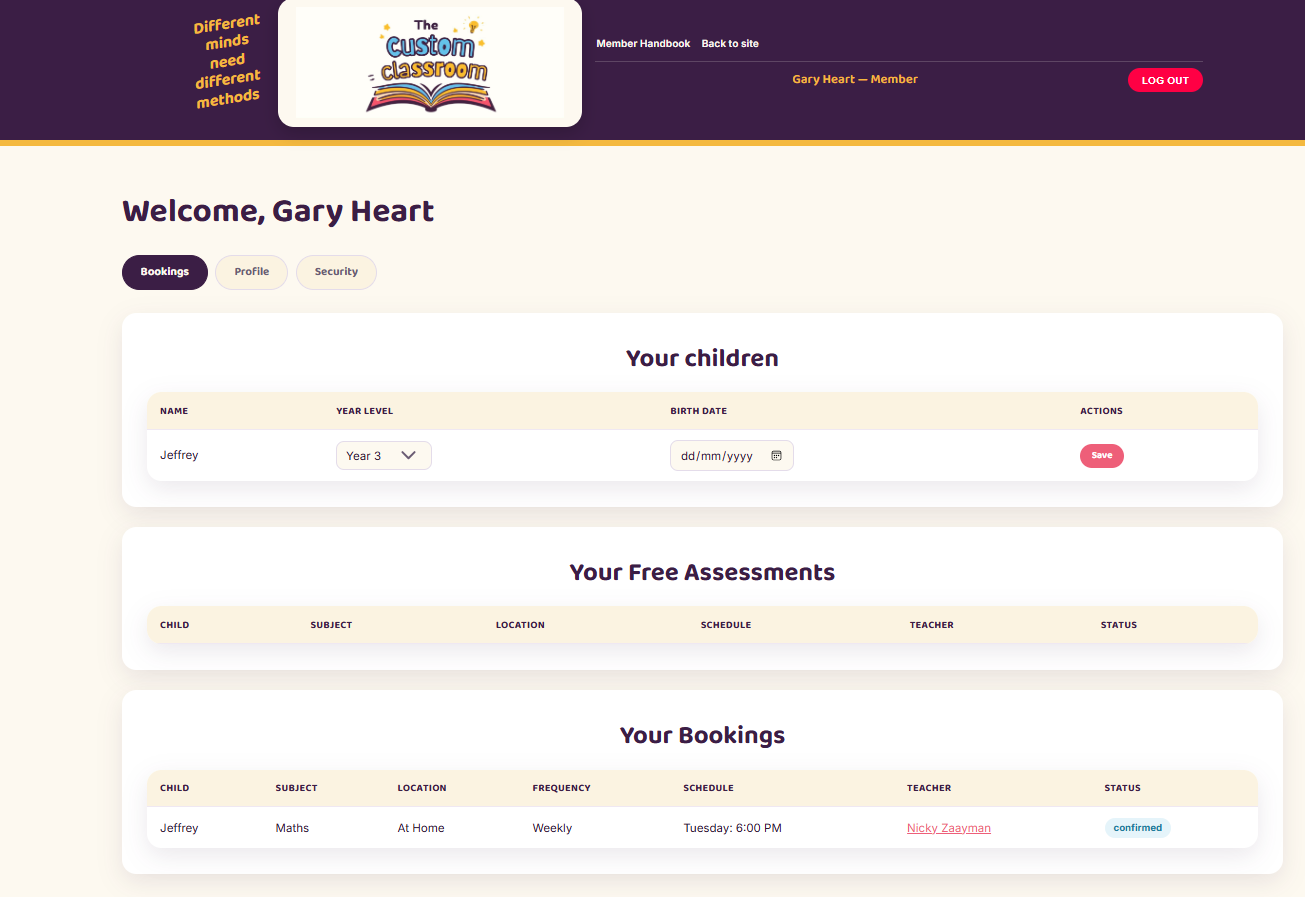
A client-facing site, a teacher dashboard (with extra admin rights for running the business) and a parent dashboard – teachers and parents each log in to their own portal to see their bookings and manage their own details – with serverless backend functions, scheduled automations and a PostgreSQL database secured with Row Level Security.
Stack
- TypeScript
- Supabase
- Serverless functions
- PostgreSQL
- Row Level Security
- Google Maps Platform API
- GitHub Actions
- Claude Code
How a booking flows
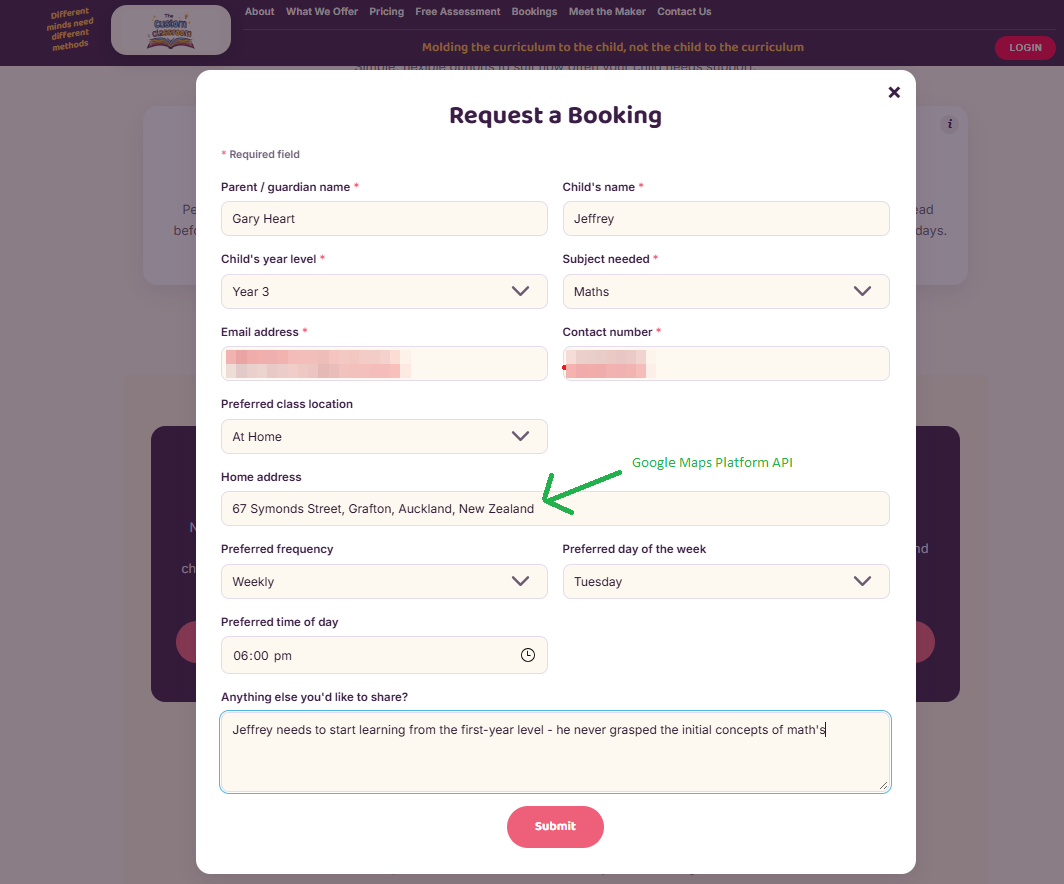
- 1Client requests a session
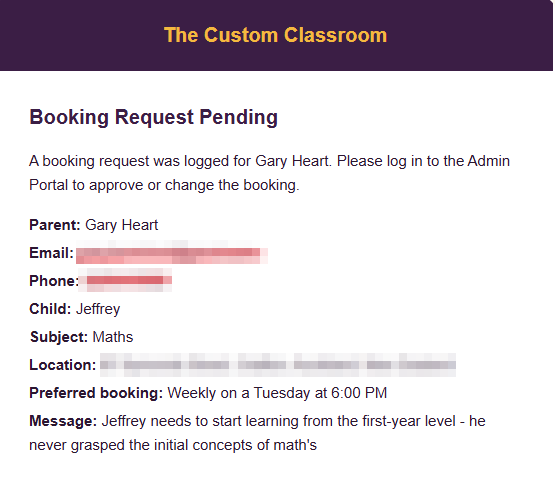
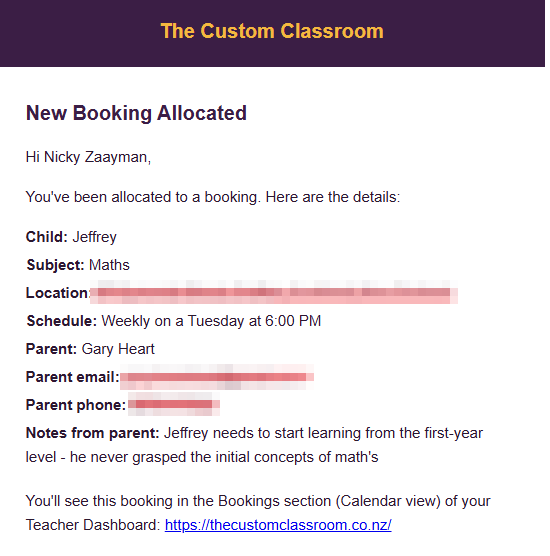
- 2Teacher gets an email automatically
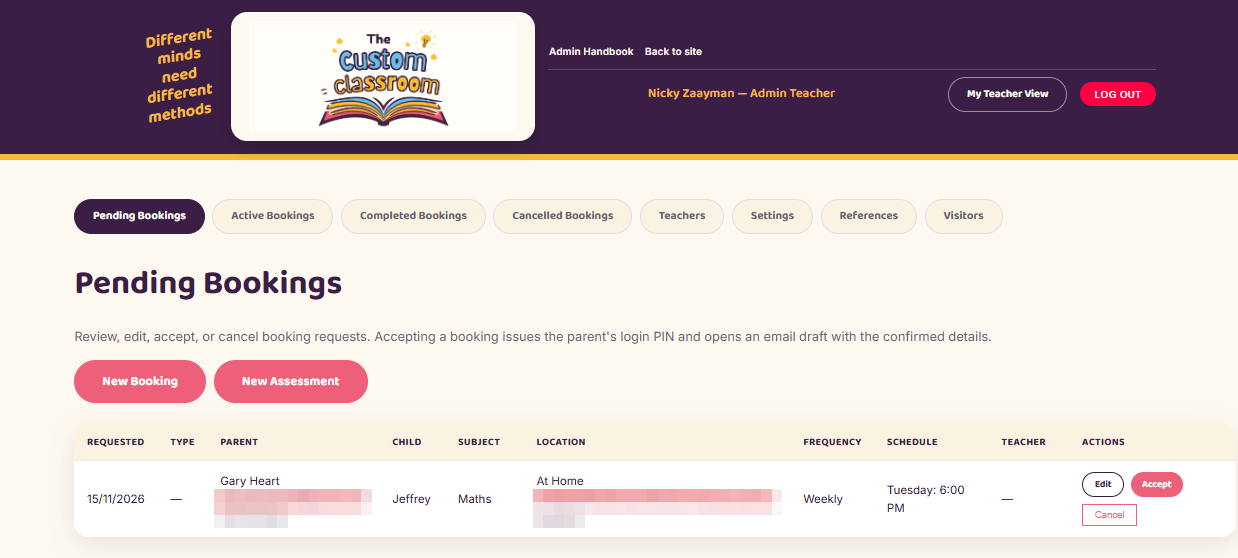
- 3Teacher approves – or gets in touch first
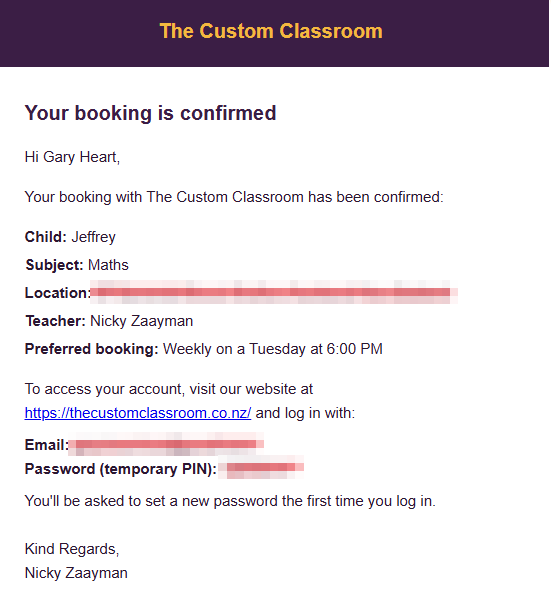
- 4Booking confirmed and scheduled
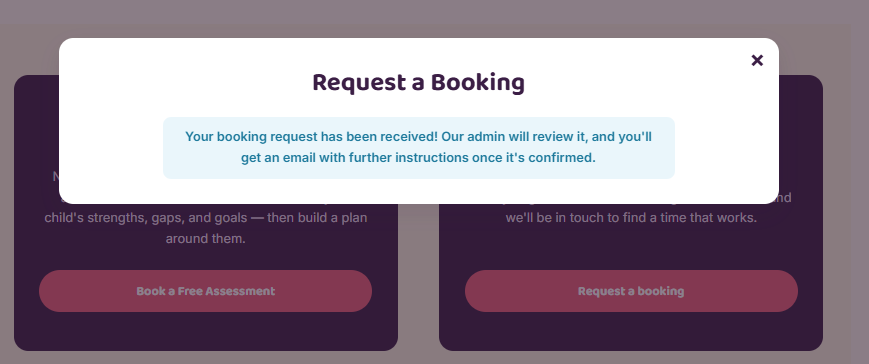
The workflow is automated, but approval stays with a person – nothing lands in the schedule without the teacher's say-so.
Configurable and ready to grow
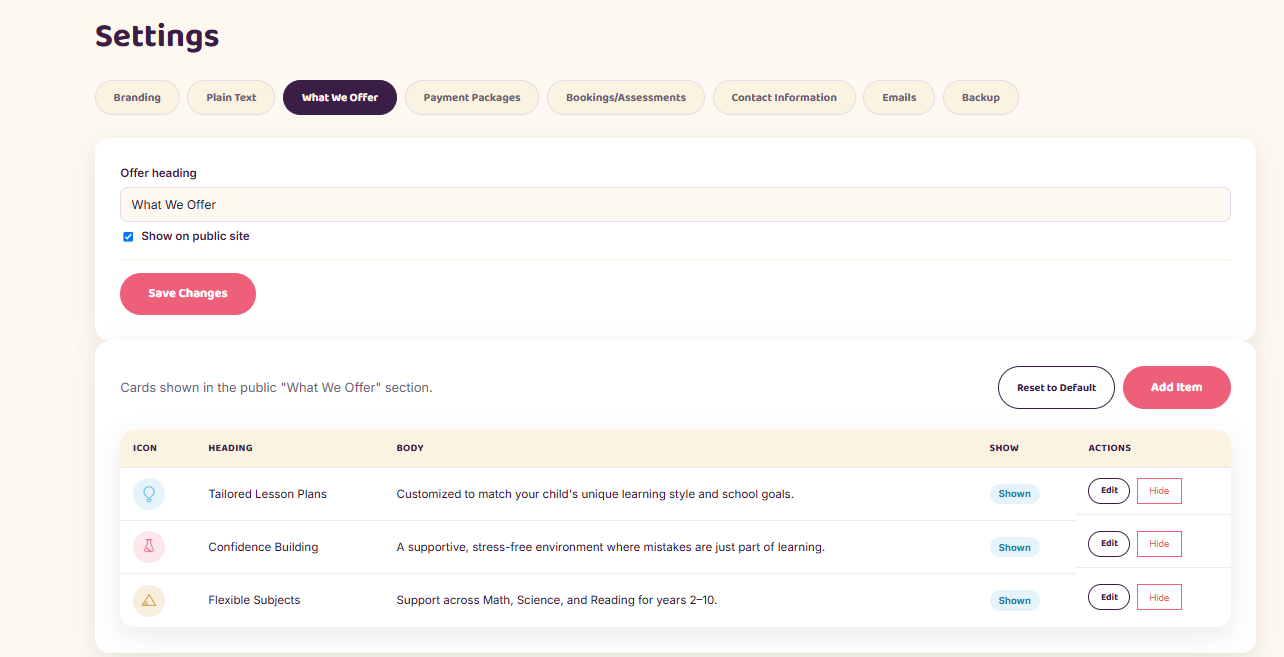
- Fits any lesson-based business. The whole site is configurable from the Settings area of the admin teacher's dashboard: branding, page wording, what's on offer, payment packages, booking and assessment options, contact details and email templates, plus backups. Each section can be shown or hidden, so it could just as easily run private dance lessons or music tuition as tutoring.
- One teacher or a whole team. Add more teachers and the menu switches to "Meet the team", listing everyone automatically.
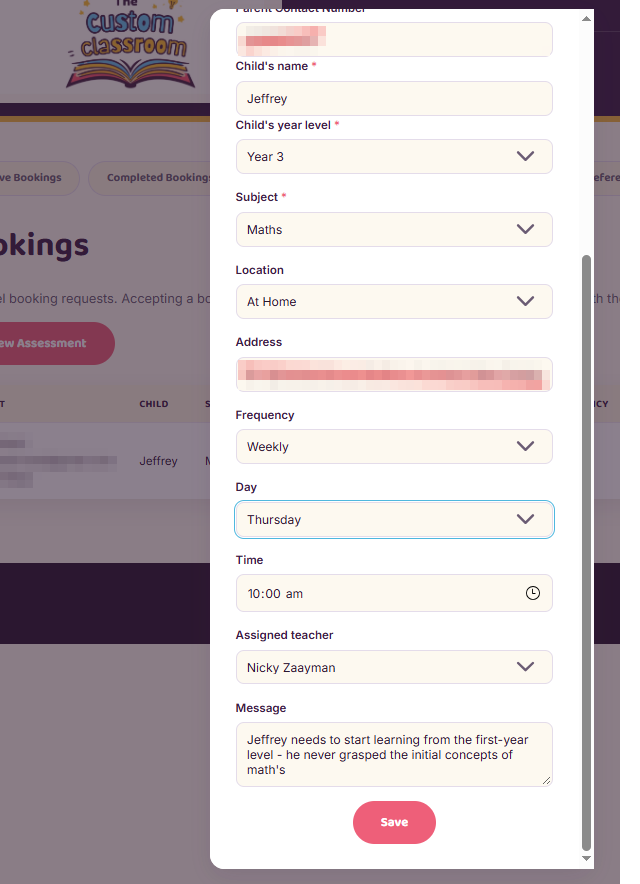
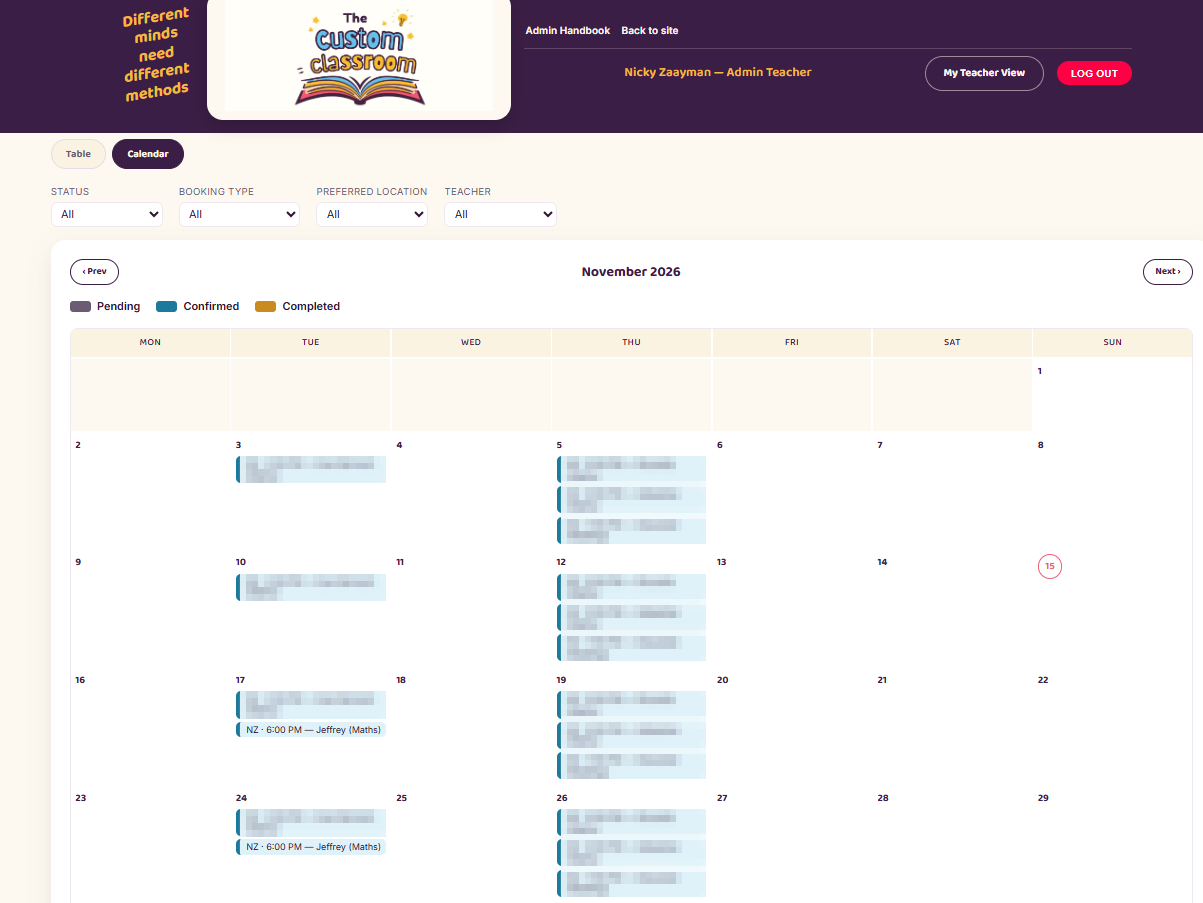
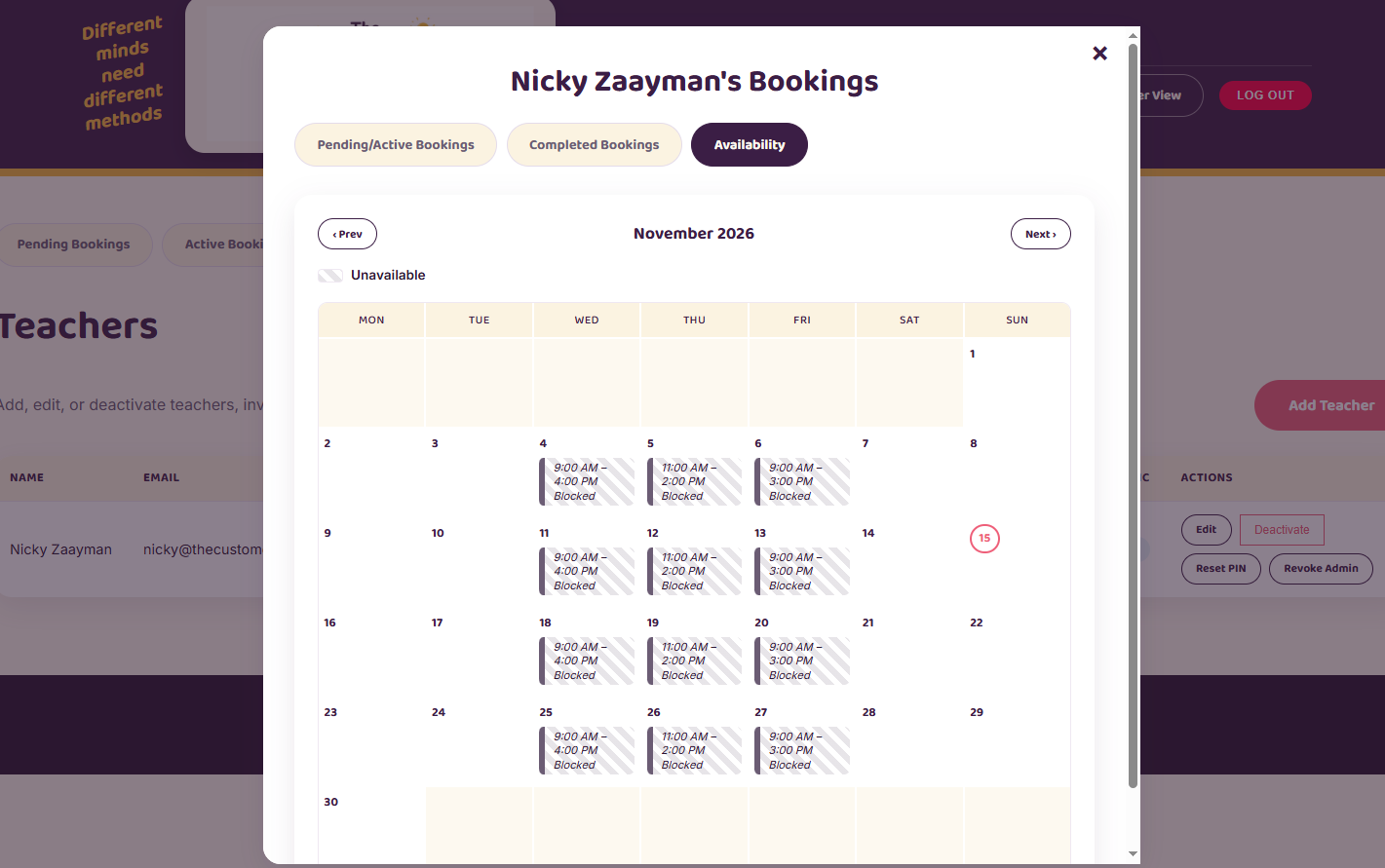
- Admin teachers run the schedule. They assign each booking to a teacher and accept it, and can see every teacher's calendar in one place. A teacher's blocked-out times decide whether they're available for that day and time.
- Teachers control their own time. Each teacher can block out times when they're not available, and the system automatically stops classes being assigned to them at those times.
Behind the scenes
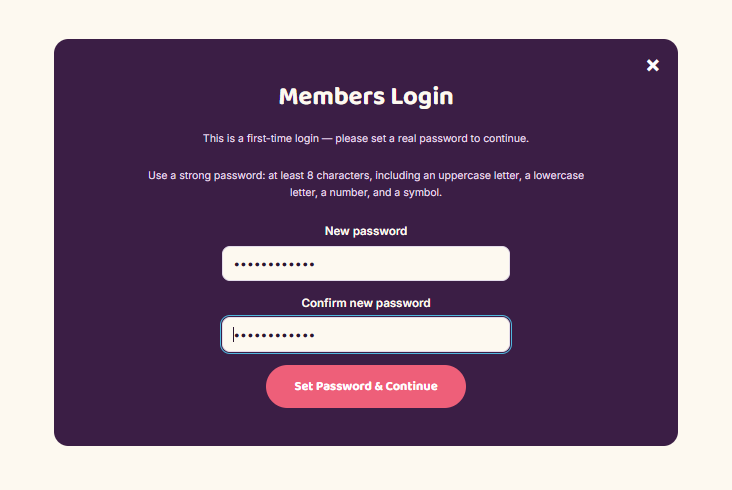
The client-facing site is live, so you can view it for yourself. The screenshots below show the parts visitors don't see: where booking requests are reviewed, the teacher and parent dashboards, teacher availability, the settings that make the site configurable, and the emails that drive each booking.
Professional work
Highlights from client work
Client code stays private, so these are described rather than shown.
Professional work
Highlights from client work
Client code stays private, so these are described rather than shown.
- AI-powered reporting automation – Claude APIs and a Python MCP service that collect operational data and produce and send monthly client reports automatically.
- Cloud transformation – discovery and migration planning for an on-premises estate of 47 virtual machines, and a cloud-native Azure Files replacement for an ageing file server.
- Legacy platform retirement – automated migration of 84 Confluence spaces and around 2,270 pages with zero failures.
- 20 years of production systems – large-scale telecommunications middleware at Altron, run under demanding service-level agreements, plus mentoring and onboarding programmes for engineers.